
Caylent Catalysts™
Generative AI Strategy
Accelerate your generative AI initiatives with ideation sessions for use case prioritization, foundation model selection, and an assessment of your data landscape and organizational readiness.

Secretariat is a leading professional services firm whose expert witnesses are engaged in the highest-stakes legal, risk, and regulatory matters around the world. Expert witnesses and their teams spend time reviewing complex documents, analyzing evidence, assessing issues, preparing expert reports, and providing testimony. The exploding volume of information in modern disputes creates a significant and growing challenge: finding the right evidence to form conclusions quickly while maintaining accuracy and defensibility. Secretariat worked with Caylent to engineer a first-of-its-kind AI assistant for the expert witness industry. A production-grade GenAI platform built on Amazon Bedrock and Claude, it delivers retrieval-augmented generation (RAG)-based document analysis with real-time citations and confidence scoring. The platform also includes a multi-agent expert report analyzer that evaluates potential strengths and weaknesses.
→ Production GenAI platform on Amazon Bedrock and Claude with RAG-based document Q&A, inline citations, and a proprietary guardrail engine, paired with VoyageAI's legal-domain embedding model, that significantly reduces hallucinations
→ Multi-agent expert report analyzer that compares reports against legal standards
→ Enterprise multi-tenant architecture with firm-level and matter-level data isolation, segmenting every case in its own dedicated S3 bucket with tenant-scoped OpenSearch indices, JWT-embedded permissions, and AWS WAF protection
→ Intelligent document processing engine supporting PDFs, Word, Excel, scanned materials, email archives, and ZIP uploads
→ PDF-to-audio conversion via Amazon Polly, so experts can review case materials on the go
→ The first expert witness consulting firm to deploy a proprietary AI platform on Amazon Bedrock
→ Enables experts to uncover critical insights and receive source-backed citations in minutes
→ Addresses hallucination management concerns, significantly improving efficiency and accuracy in fact-checking work
→ Provides a competitive advantage when law firms evaluate expert witness providers
→ Built-in transparency, auditability, and data isolation help Secretariat meet clients' growing AI disclosure and governance requirements
→ Enables future platform expansion with multi-tenancy development from day one, avoiding future platform rebuilds
Expert witnesses often are the linchpins of complex commercial litigation and arbitrations. When a law firm needs to challenge a damages calculation, analyze a multi-billion-dollar construction dispute, or scrutinize an opposing expert's qualifications and conclusions, the experts they retain frequently play a pivotal role in the outcome of the case.
Law firms and their attorneys turn to Secretariat’s forensic accountants, economists, engineers, and sector specialists for expert analysis and testimony in high-stakes disputes worldwide. As case volumes and data complexity continue to grow, Secretariat saw an opportunity to apply GenAI to help experts work more efficiently without compromising accuracy, defensibility, or client confidentiality.

Secretariat’s expert witnesses and their teams spend significant time reviewing case materials, performing analysis, preparing expert reports, and giving expert testimony. These resource-intensive efforts have become increasingly demanding over the past two years. The amount of information exchanged in disputes has skyrocketed, and hallucinated case citations have become more prevalent in legal filings, creating significant risk for both lawyers and expert witnesses. “Organizing and managing information for expert discovery has become significantly more challenging in recent years,” said Richard Finkelman, Managing Director at Secretariat and one of the co-architects of the application. “The rapid proliferation of data that took off with the pandemic has exploded with AI-generated content. In this new and persistent environment, our clients are often handling millions of documents, which makes the review and analysis our experts perform highly complex.”
To address these challenges, the Secretariat team evaluated several GenAI solutions claiming robust features and functionality capable of addressing experts’ unique requirements and workflows. The team quickly determined that commercial chatbots and general-purpose AI platforms could not handle complex documents safely or without significant hallucination risk. A new, built-for-purpose solution – by experts, for experts – was needed.
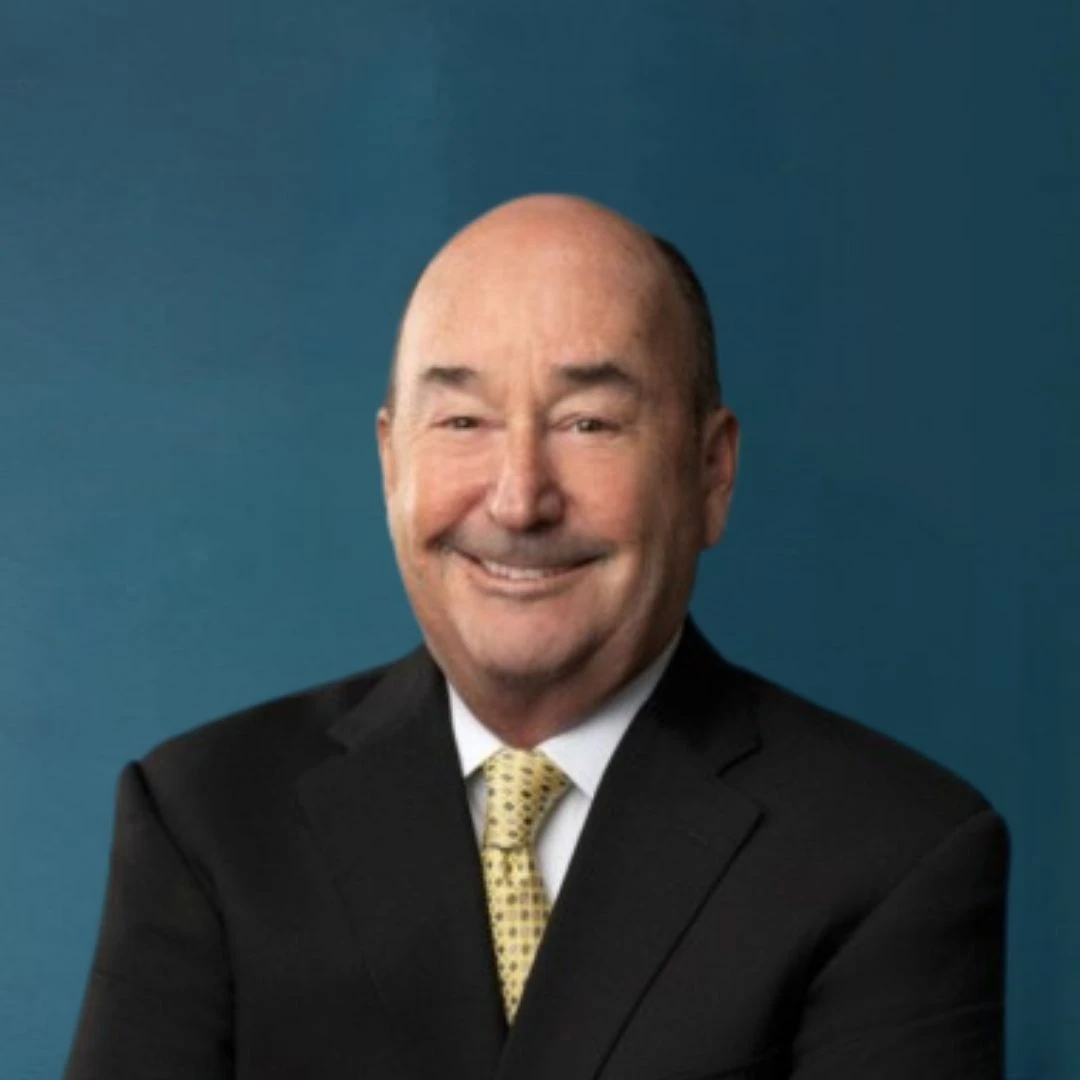
“Caylent was committed to understanding our industry, our workflows, and the challenges we were trying to solve. They approached the engagement as a true partner, not just a technology vendor. Working with their team was seamless and frictionless, and that made all the difference.”
Richard Finkelman
Managing Director

Secretariat had a clear understanding of what it needed and where it could not compromise. Hallucination prevention and data privacy were not features to layer in later; they were the foundation of the entire platform. Building on that foundation, Caylent worked side by side with Secretariat to translate the realities of expert witness work into an architecture capable of handling them.
The result is a platform built around a RAG-based document Q&A engine. Experts upload case materials in any format and ask natural-language questions. Every answer includes source citations and a confidence score that helps the expert assess how well-grounded the response is. That confidence scoring was a direct response to the hallucination risks that make AI adoption challenging in legal work.
“The guardrail engine was one of the most important components of the platform,” said Bilal Shah, director and co-architect of the solution at Secretariat. “If experts can't trust the answers, they won't use the technology. Reducing hallucinations and giving users greater confidence in the results was critical from day one.”
From there, Caylent and Secretariat pushed further. Working closely to understand the workflows that consume the most expert time, they co-developed a multi-agent expert report workflow. This required Caylent to gain a deep understanding of both the legal standards and how attorneys challenge opposing experts. “Caylent didn't just build the technology. They took the time to understand how experts work. That knowledge became part of the solution,” said Shah.
The workflow helps experts assess qualifications, identify relevant information from documents and reports, and analyze the strengths and weaknesses of expert opinions and work product. Experts typically have only a few weeks to respond once the other side's expert reports are filed; the workflow helps them accomplish more within that time frame.
“The thoughtful integration of RAG and agentic AI in a single application that reduces hallucinations was a significant achievement,” said Lorie Wijntjes, Secretariat’s director of artificial intelligence. “It provides a strong foundation for responsible, scalable AI and, most importantly, AI that experts can trust.”
Responsible AI was never an afterthought. Caylent architected the platform so that every law firm's data lives in its own isolated tenant environment, with matter-level S3 partitioning, scoped OpenSearch indices, and KMS encryption baked in from day one. That posture has already held up to real scrutiny as clients are increasingly requiring AI disclosures in engagements.
The platform is an expert support tool first and foremost. Any answers, analyses, confidence scores, or report-evaluation outputs are provided for informational purposes and must be reviewed and validated against the underlying source documents. Secretariat experts and their teams retain sole responsibility for professional judgment, conclusions, and any use of or reliance on system outputs. Authorized users receive mandatory training on appropriate use, confidentiality, source verification, limitations of AI-generated outputs, and human oversight obligations before using the platform.
“As law firms increasingly require disclosure and approval of AI use, trust has become a critical differentiator,” said Wijntjes. “It is not uncommon for our experts to receive tens of thousands of documents on a project. Our platform combines the ability to batch process those documents with the transparency, auditability, data processing documentation, and security controls Secretariat experts and the legal teams they work with need to confidently meet evolving AI governance and disclosure requirements.”
The platform includes strict guardrails by design. Documents entered into the platform remain within their specific matter environments, are not shared across matters or client engagements, are accessible only to authorized matter personnel, and are never used to train large language models or foundation models.
The Secretariat team noted Caylent’s genuine curiosity, rigorous preparation, and commitment to partnership as key elements in the successful collaboration. Rather than making assumptions, the team invested time in asking the right questions and understanding the business challenge.
“Caylent was committed to understanding our industry, our workflows, and the challenges we were trying to solve,” said Finkelman. “They approached the engagement as a true partner, not just a technology vendor. Working with their team was seamless and frictionless, and that made all the difference.”
“We believe this is a different way of working,” Finkelman said. “Put together, the platform and partnership with Caylent have been a game changer for Secretariat, setting us apart in the expert witness industry.”
Caylent built the platform on a fully AWS-native stack, anchored by Amazon Bedrock and Claude for AI-driven document analysis and retrieval. Vector search and embeddings run on AWS's managed data and search services, with secure multi-tenant storage across S3 and Aurora PostgreSQL. Identity, encryption, and network security are handled through AWS's native security and access management tools, while Terraform and GitHub Actions drive infrastructure automation and deployment.
Caylent Catalysts™
Accelerate your generative AI initiatives with ideation sessions for use case prioritization, foundation model selection, and an assessment of your data landscape and organizational readiness.

Caylent Services
Turn AI tool use into a governed, compounding capability. Delivered by ACE, Caylent’s Anthropic Consulting & Engineering practice.
Caylent Services
Define product direction, design trusted experiences, and deliver AI-enabled products built for adoption, scale, and measurable outcomes.