 Guille Ojeda
Caylent Catalysts™
Generative AI Strategy
Accelerate your generative AI initiatives with ideation sessions for use case prioritization, foundation model selection, and an assessment of your data landscape and organizational readiness.
Explore what’s new in Claude Opus 5.5, from stronger coding and knowledge-work performance to lower pricing, updated API behavior, and broader safeguards.
Anthropic just launched Claude Opus 5.5, raising the capability of the Opus tier while lowering its price. Their evaluations show improvements over Opus 5 across coding, professional knowledge work, and computer use. Moreover, base prices dropped to $4 per million input tokens and $20 per million output tokens, a 20% reduction from Opus 5.
Opus 5.5 can match or exceed Fable 5.1's reported results across the selected evaluations while charging 60% less per base input and output token. That makes Opus 5.5 a compelling starting point for demanding software engineering, research, analysis, and agents producing professional work.
Beyond benchmark performance and cost, Opus 5.5 introduces several practical changes to consider. Adaptive thinking is always enabled, medium becomes the default effort, and broader safeguards affect how some requests are handled. In this blog, we will look at what improved, where the model fits, and what changes if you’re moving from an existing Claude model.
Opus 5.5’s coding gains show up in evaluations that ask agents to do work inside development environments. Terminal-Bench measures task completion in a terminal. FrontierCode evaluates autonomous repository changes against both functional checks and code-quality criteria, including whether the change stays within the requested scope.
The professional-work comparison uses GDPval-AA, which evaluates deliverables such as documents, spreadsheets, and presentations. Its Elo rating comes from comparisons between outputs, where a higher rating indicates stronger performance, rather than a percentage of tasks completed. OSWorld 2.0 adds a different dimension by measuring work through computer interfaces.
Here are four representative results from Anthropic’s launch evaluations:
These Opus 5.5 results use maximum effort, except Terminal-Bench, which uses xhigh. The evaluations also ran with production safeguards, which means some blocked tasks continued on fallback models. The scores therefore describe the evaluated system, including that routing.
The coding improvement over Opus 5 is substantial in these results. Terminal-Bench rises by 14.1 percentage points, and FrontierCode also improves. That combination supports preferring Opus 5.5 for feature implementation, debugging, refactoring, and code review, the kinds of work where an agent has to understand existing code and produce a useful change. For example, a repository task might require tracing a bug across several files, changing the responsible code, and updating tests. The agent has to navigate the environment and produce a patch that fixes the problem within the requested scope. The progress shown in those two kinds of evaluation makes Opus 5.5 a good fit for a complete engineering task.
For knowledge work, the higher GDPval-AA rating supports using Opus 5.5 when the output requires substantial analysis. For example, you might ask it to compare several reports, work through their figures in a spreadsheet, and prepare a summary for a decision-maker. That request connects research, analysis, and writing.
Computer use improves over Opus 5 as well, although the comparison with Fable is closer. OSWorld’s 81.8% is a partial-credit score, measuring progress within tasks rather than an 81.8% rate of completing entire workflows. The result supports the upgrade from Opus 5, and though it doesn't establish a large advantage over Fable 5.1, pricing would make Opus 5.5 preferable over Fable 5.1.
Anthropic also reports clearer progress updates, shorter summaries of long runs, and more direct explanations of what the model did and needs next. That’s a welcome improvement, besides the stronger execution. When an agent works across files and tools, you need to understand its changes and where it needs your input, and previous models were known for being overly verbose in these areas.
On our own Caylent internal benchmarks, Opus 5.5 scored essentially the same as Opus 5: 0.917 vs 0.913 (within noise), and notably more consistent run-to-run: σ=0.012 vs σ=0.040. It ran ~1.9x faster and ~49% cheaper per case. We've already migrated some workloads to it from Opus 5.
Opus 5.5 lowers both the standard Opus token prices and the cost of reading cached context. Here’s how it compares with the existing Claude models, in US dollars per million tokens:
For equal volumes of uncached input and output, the savings are 20% compared to Opus 5 and 60% compared to Fable 5.1. As an example, suppose your requests total one million uncached input tokens and 100,000 output tokens. Those tokens would cost $6 on Opus 5.5, $7.50 on Opus 5, and $15 on Fable 5.1.
Caching is an important factor to take into account. When requests reuse cached context, the cache-read rate applies to those tokens, instead of the input price. Opus 5.5 reduces that rate by 60% relative to Opus 5, so applications that repeatedly reuse substantial context have another source of savings. Compared to Fable's prices, cache reads are 20% cheaper. Your overall cost reduction therefore depends on the mix of uncached input, cache activity, and output.
Anthropic expects roughly 40% lower cost per completed task than Opus 5, reflecting lower prices and improved token efficiency. That’s a broader expectation than the 20% base-price reduction, which can be attributed to the increase in capabilities even at lower reasoning settings. The example above shows the savings at equal token volumes, but the cost of completing actual work also depends on how many tokens the model uses and which requests benefit from caching. For that reason, we recommend running your own evaluations against every new model.
Anthropic also expects roughly 30% faster output-token generation than Opus 5, reducing the time required to complete tasks.
For demanding coding and professional work, we recommend teams start with Opus 5.5. The combination of higher reported results and lower pricing makes the choice particularly clear for existing Opus 5 users. The rest of the family still has a place across different uses:
low effort.Context capacity is another difference worth considering. Opus 5.5 supports a one-million-token context window and up to 128,000 output tokens, matching Opus 5, Fable 5.1, and Sonnet 5. Haiku 4.5 supports 200,000 and 64,000 tokens, respectively. Opus 5.5 also retains standard input pricing across its full context window, without a premium above 200,000 tokens like Sonnet 5. Opus 5.5 well suited to workloads that require processing large amounts of context without incurring higher input costs at scale.
The main difference when switching from Opus 5 is that for Opus 5.5, adaptive thinking is always enabled, whereas for Opus 5, adaptive thinking is an available setting but is disabled by default.
Adaptive thinking means the model decides how much reasoning to use, and you steer it through the effort setting. The available levels are low, medium, high, xhigh, and max. medium is the default. Requests to Opus 5.5 that disable thinking or specify a manual thinking budget return HTTP 400, which is a breaking change compared to Opus 5.
What you need to change depends on your current model’s thinking configuration:
Medium is a sensible starting point for reasons beyond cost. In Anthropic’s FrontierCode effort comparison, Opus 5.5 scores 54.6% at medium, slightly above its 54.4% result at max. A higher effort setting gives the model more room to work, but it doesn’t guarantee a better result on every task.
Higher effort can be useful for particularly difficult problems. It can also lead to extra checking or adjacent work beyond the request. On the other hand, at low effort, the model can stop short of completing the task. Starting at medium gives you the recommended default, with room to increase effort when the work calls for it. Note: teams should not assume their previous effort setting is still best for this new model. Test Opus 5.5 across a range of effort settings, since it may deliver similar quality to previous models at lower effort settings, reducing costs for your workloads.
Long-running agents also get two new context compaction options, currently in beta. Compaction summarizes older conversation turns so the agent can keep working within its context window. The new options preserve the most recent turns word for word while summarizing older history, and allow the summary to be built in the background while the agent continues working.
This is useful if your application currently shortens conversation history itself. Custom edits to earlier turns can break preserved thinking, while the reasoning information is carried forward between turns. API-managed compaction moves those summarization patterns into the service, reducing the need for your own implementation of history editing. Compaction already existed, but these additions address two common reasons we've observed for building custom handling.
Opus 5.5 brings Fable-level classifiers to the Opus family, screening work in cybersecurity, biology, AI research and development, and distillation (reasoning extraction). Anthropic also reports its strongest Opus prompt-injection resistance yet, tied with Fable 5.1 on Gray Swan’s benchmark.
Opus 5 already had classifiers and fallback behavior. The change is the broader coverage and the routes available when a classifier blocks work on Opus 5.5. Fallback lets an eligible request continue on another model:
Fallback is automatic in Claude applications and Claude Code. On the Claude API, it’s opt-in through the beta Fallback API. This means a task can continue after a block, with a different model handling the affected work. Anthropic's benchmark results include fallback behavior.
Note that Anthropic’s server-side fallback documentation separates the Claude API from partner-operated endpoints such as Amazon Bedrock, where fallback requires client-side handling.
Another important point is that classifier decisions and permitted usage are separate questions. A request may be routed to a model with different safeguards while remaining subject to Anthropic’s Usage Policy. Fallback doesn’t grant permission for otherwise prohibited activity.
Additionally, unlike Fable 5.1, Opus 5.5 adds no model-specific data-retention requirement. Fable falls under Anthropic’s Covered Models requirements, generally including at least 30 days of retention. For Opus 5.5, your existing agreement and platform settings determine the retention requirements.
Opus 5.5 improves the case for using an Opus model on substantial engineering and professional tasks. It raises reported performance over Opus 5 and compares favorably with Fable 5.1 on the selected evaluations, at lower token prices for both comparisons.
We recommend starting at medium effort for coding, research, analysis, and tool-using knowledge work. If you’re migrating an existing application to Opus 5.5, compare completion quality and cost on representative tasks and your own evaluations, and account for its always-on adaptive thinking configuration. That gives you a focused way to confirm the benefit while keeping the model choice tied to your specific work.
As a Preferred Services Partner and Charter Member of the Claude Partner Network, Caylent helps you select and implement Claude models for your applications. Our Anthropic Consulting & Engineering practice supports adoption, enablement, and building agentic applications, including the workload evaluation and cost optimization needed to make a model upgrade useful in production.
Whether you’re moving an Opus 5 application, considering Opus 5.5 for work currently handled by Fable, or building a new agent, connect with us to determine the right model and integration approach for your workload.
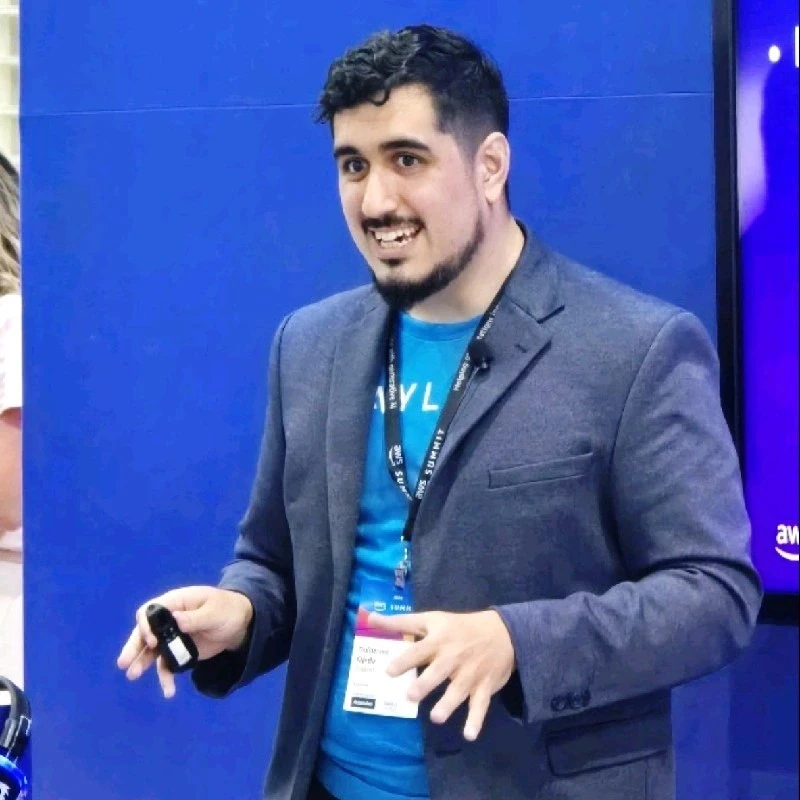
Guille Ojeda is a Principal Innovation Architect at Caylent, a speaker, author, and content creator. He has published 2 books, over 200 blog articles, and writes a free newsletter called Simple AWS with more than 45,000 subscribers. He's spoken at multiple AWS Summits and other events, and was recognized as AWS Builder of the Year in 2025.
View Guille's articlesCaylent Catalysts™
Accelerate your generative AI initiatives with ideation sessions for use case prioritization, foundation model selection, and an assessment of your data landscape and organizational readiness.
Caylent Catalysts™
Accelerate investment and mitigate risk when developing generative AI solutions.
Leveraging our accelerators and technical experience
Browse GenAI Offerings
Explore what’s new in Claude Fable 5.1, how it compares to Fable 5, and what organizations should validate before migrating their workloads.
Explore how AWS Agent Registry can reduce custom work and endpoint-management work while enabling governed publication and runtime discovery across growing agent ecosystems.
