Artificial Intelligence
From Tokenomics to Taskonomics: The Complete Cost of AI
Inference is only part of what an AI workflow costs. Taskonomics is a new way to measure the full cost of each accepted result, from the model bill to review, rework, and downstream consequences.


On this page
From Tokenomics to Taskonomics: The Complete Cost of AI
If you're building an AI workflow to draft documents, you can estimate the model bill by multiplying expected input and output token counts by their respective rates. Those charges are an important part of the cost of completing the task, and this way of measuring AI cost is called tokenomics. However, inference alone doesn't tell the full story, there are many more terms in the cost equation of an agentic AI workflow.
The workflow's operating costs often also include retrieving source data, running checks, and getting the document through review. Plus, there's the time reviewers spend verifying figures and correcting explanations. If the AI workflow requires more review time than a manual draft, some of the time and costs saved on drafting shift to review. Taskonomics is a new approach to calculating AI costs by measuring what the entire workflow spends for each result the business accepts, including AI costs, non-AI costs, human costs, the costs of verifying a result, of rework if a result isn't accepted, and of any downstream consequences. This lets you compare that cost with what the existing process spends per accepted result to understand whether the benefits of building and deploying an AI agent for a given workflow justify the investment.
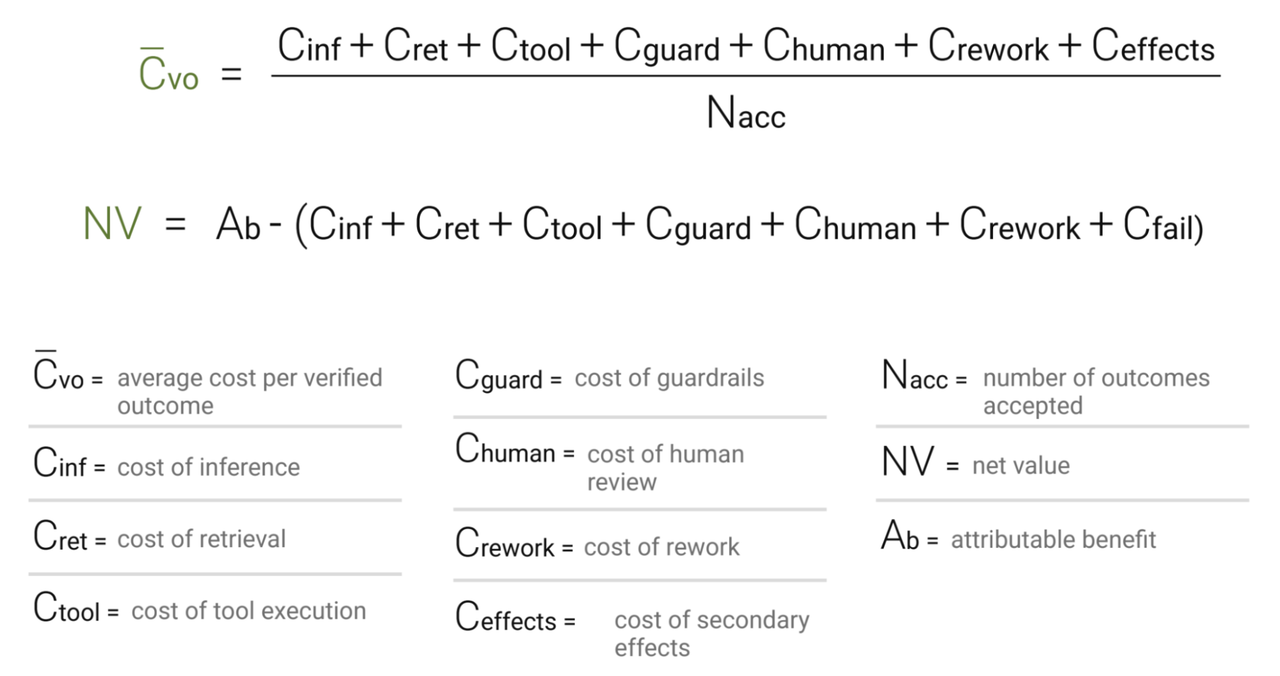
We call the total cost the Cost per Verified Outcome (CVO), and we explain it in more depth in our whitepaper, The Business Value Realization of AI.
Below is the CVO equation:
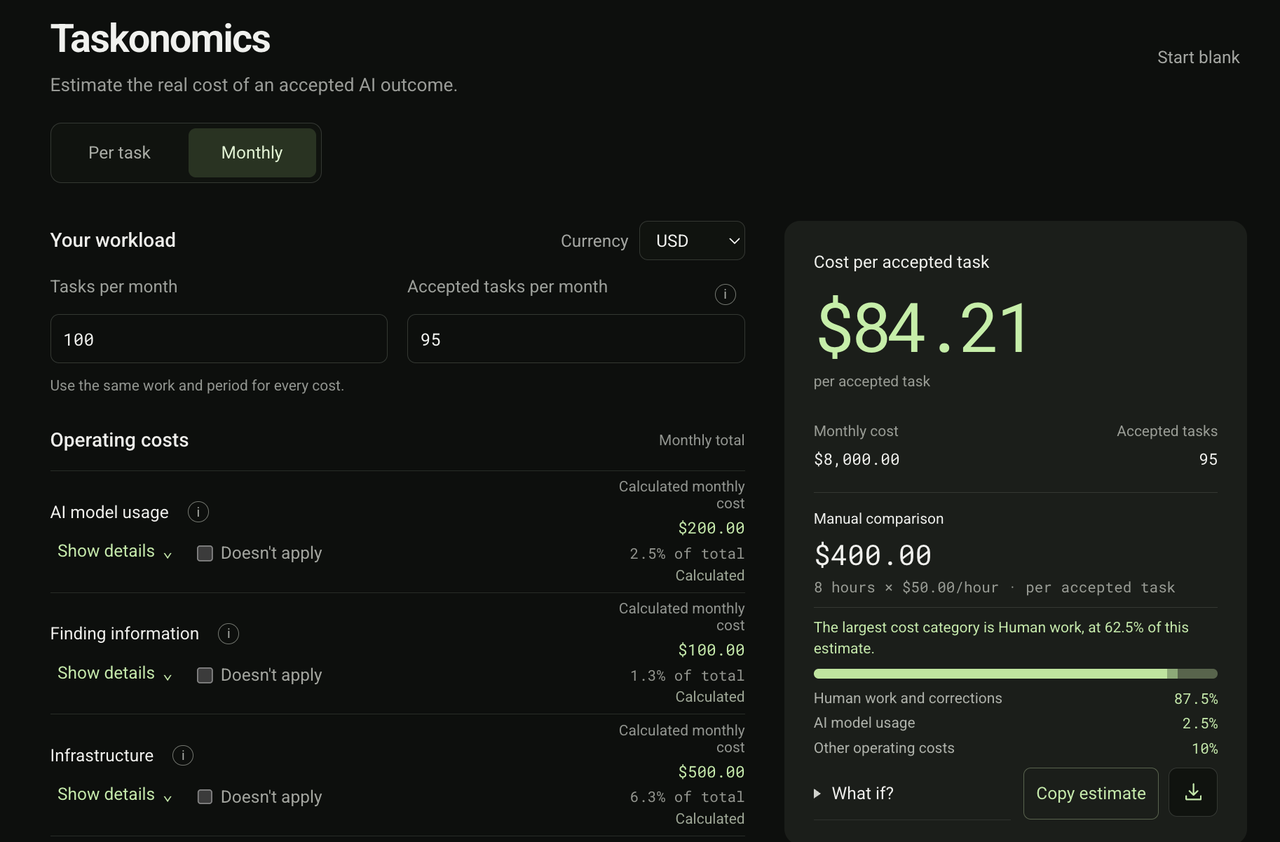
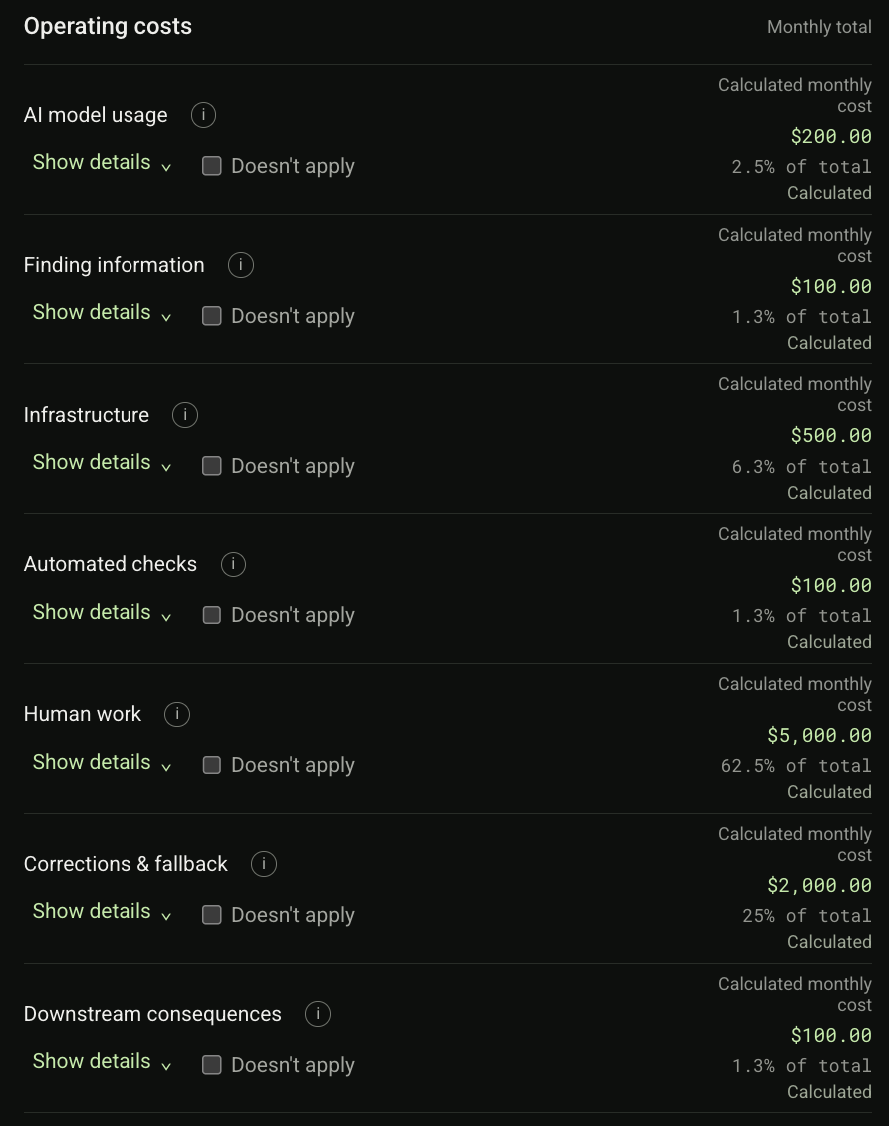
Consider a team that handles 100 performance reports in a hypothetical month. Its inference bill is $200, and the full workflow costs $8,000. To see where the rest of that money goes, start with how the team decides which reports are ready for use.
You can follow this example in our Taskonomics calculator and input your own numbers to calculate the costs for your workflows.
Measure Accepted Work
A performance report is considered done when the operations manager can use it to compare a client's results with targets and decide where to act. We'll consider that the approval standard for both manual and AI-assisted reports.
Our example AI-assisted workflow retrieves actual results and targets from source systems so the model can summarize variances and explain contributing factors supported by the source records. Connected services assemble and format the report, and automated checks flag issues such as missing sections. The workflow routes the report to a reviewer, who confirms the required sections are present, verifies the figures against their sources, and checks that the evidence supports the analysis before approving it.
A report that needs corrections or must be finished manually still counts as a success once it passes those checks and receives approval. Getting it there takes additional work, which needs to be accounted for in the cost of the accepted report.
Count the Complete Workflow
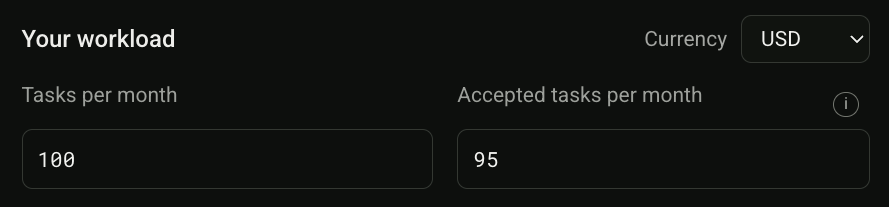
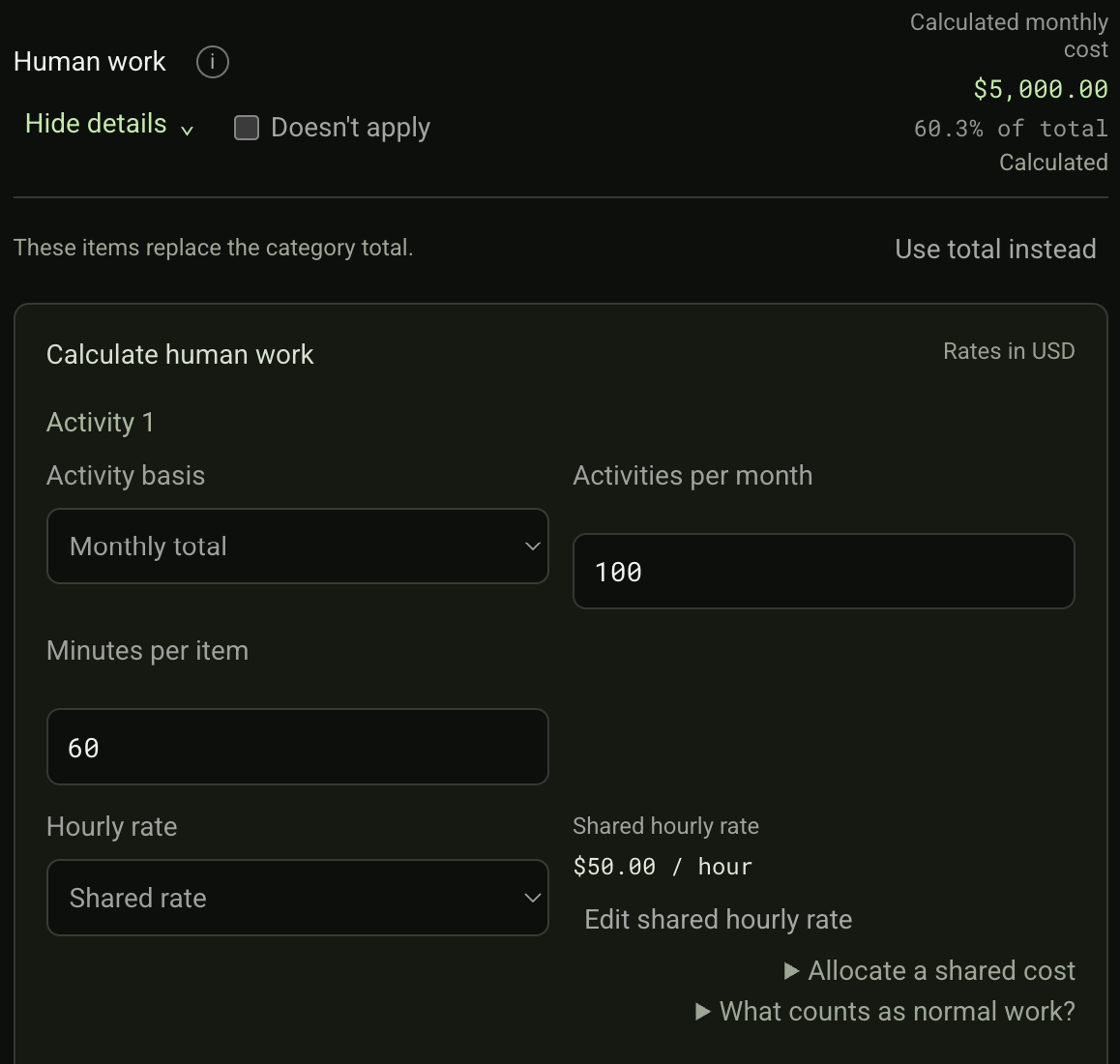
To see what it costs to get reports through approval, we need to measure the work on every report in the batch. In our hypothetical month, all 100 reports receive one hour of review at $50 per hour, including compensation and employment overhead. Twenty need two additional hours of correction each. By the end of the batch, 95 have been accepted, and five have been closed without approval. Of course, all quantities and rates here are illustrative and part of our example.
The normal review work goes under Human work, alongside routine preparation, instructions, supervision, and approval. The additional labor needed to fix or finish a report goes under Corrections & fallback, and any separately billed model retries go under AI model usage. That way, the cost of each step is accounted for once.
Dividing the $8,000 by all 100 reports gives $80 per report handled, but that's a naive calculation that doesn't take into account acceptance rates. To find out what the workflow spends per usable report, we need to divide the same total by the 95 reports that passed. We still need to use $8,000 as the total cost, because the five reports that fell short also consumed resources. This is the Cost per Verified Outcome (CVO):
CVO = total workflow operating cost / accepted outcomes
$8,000 / 95 ≈ $84.21 per accepted report
Judge Improvements Across the Workflow
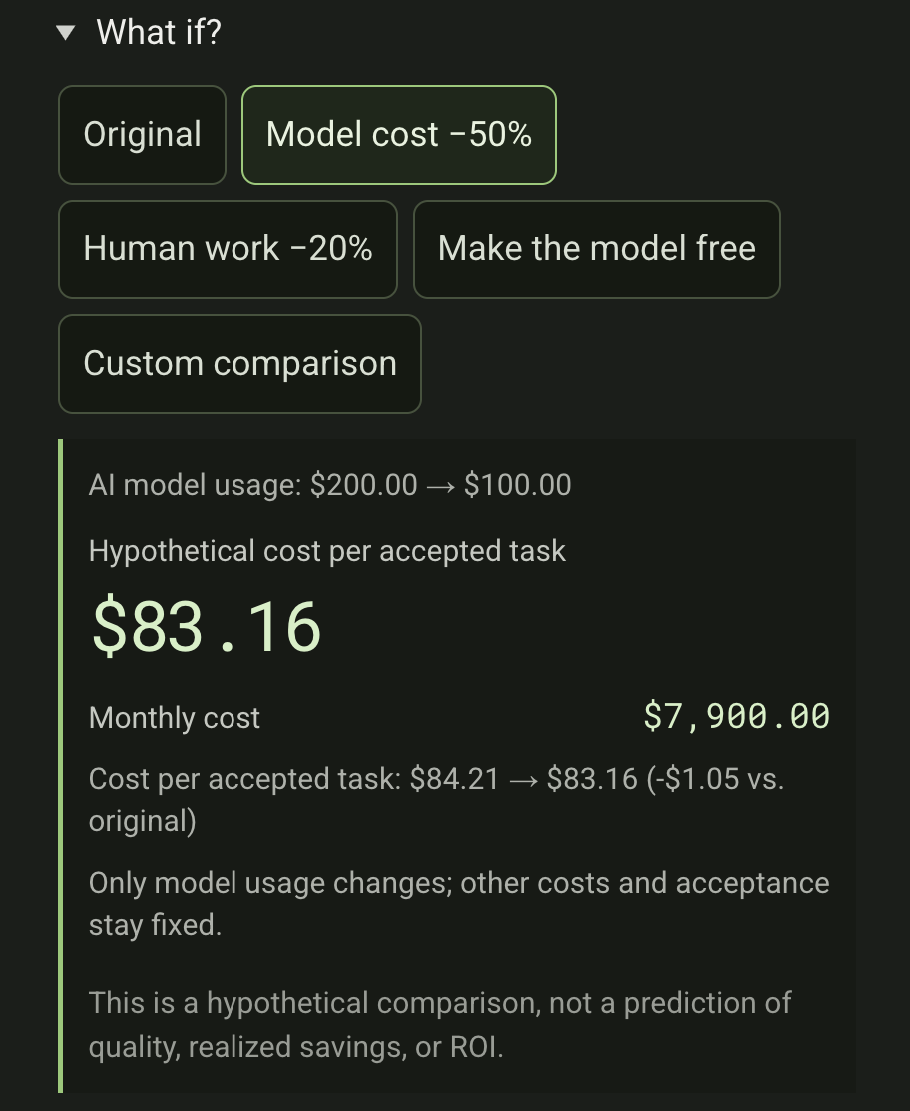
The breakdown shows you what terms dominate the cost equation, and where to focus improvements. If we found a model that cost half as much as the current one, inference costs would drop from $200 to $100, bringing the total to $7,900 before adjustments, or $83.16 per accepted report. This is a net improvement only if the other numbers don't change.
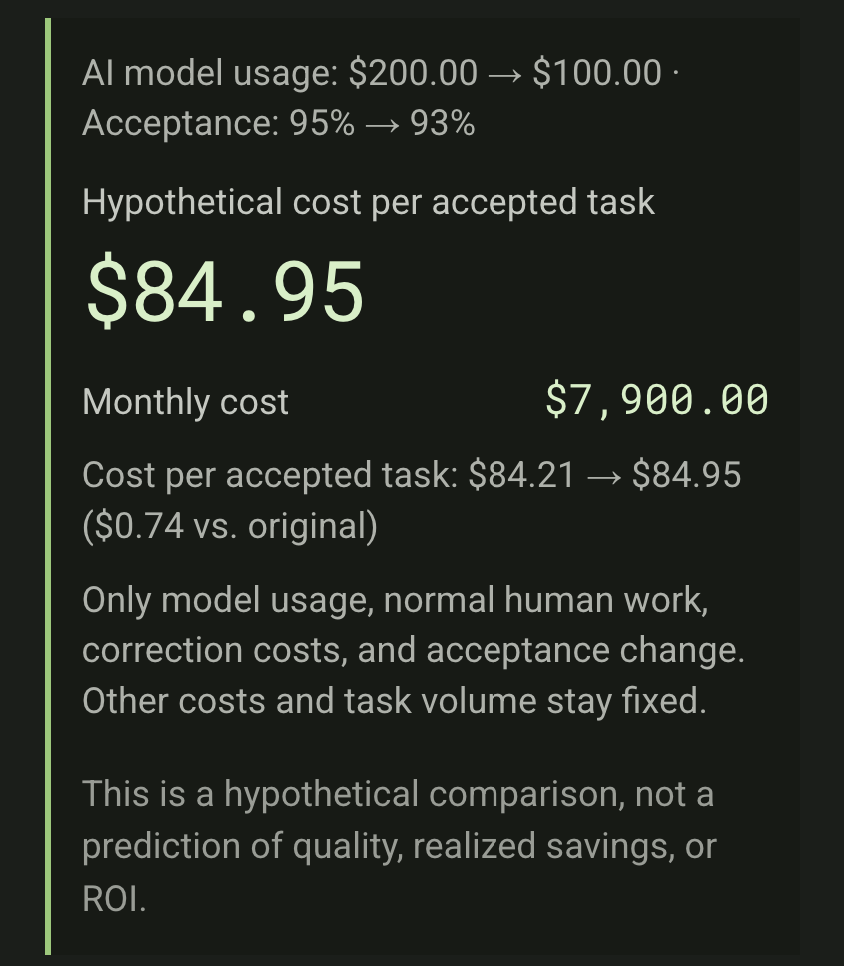
If the new model still results in 95/100 accepted reports but requires corrections on 22 reports per batch of 100 instead of our current 20, the total cost is $8,100, and this cheaper model results in a more expensive workflow. If we brought down the inference cost by $100 and no other costs changed, but our acceptance rate became 93/100, then we've lowered the total cost per batch of 100 from $8,000 to $7,900, but our cost per accepted report has gone up from $84.21 to $84.95. These are the aspects a tokenomics approach misses, and taskonomics helps you identify them.
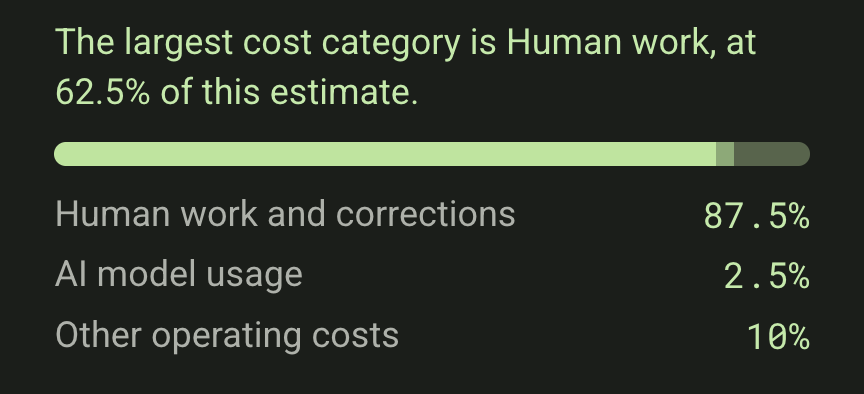
Review and correction already account for $7,000 in our example, so instead of focusing on inference costs and selecting a cheaper model, we could start by measuring where reviewers spend their time. If they spend much of it locating the records behind each figure, we could try including references to those records in the draft, and measure the effect on review time. Or we could use a more expensive model, if the change in the number of reports that need corrections and in the acceptance rate offset the increase in inference costs.
Connect Operating Cost to Business Value
The approval standard we use will give us a basis for comparing the AI-assisted workflow with alternative ways to execute the workflow, which in our example is manual report preparation. In the example, preparing and approving a report manually takes eight hours, which puts the labor cost at 8 hours * $50/hour = $400 per accepted report, assuming a 100% acceptance rate. Under the stated assumptions, the AI-assisted operating cost of $84.21 is well below that labor figure, and it includes all the costs associated with producing an accepted report. This gives us a clear measure of how much the business is saving by replacing the manual workflow with an AI-assisted workflow.
AI can also offer further benefits for a given task or workflow. We've considered that reducing human hours reduces cost, but this reduction in required labor might instead enable managers to allocate that capacity to other, more valuable tasks, creating more value than the cost of labor. Moreover, the AI-assisted workflow may result in faster turnaround times, which could become a business differentiator. It could also enable faster onboarding of new employees, reduce employee turnover due to work becoming less monotonous, and provide several other potential benefits.
Estimate the Cost of Your Workflow
To compare a proposed workflow with your current one, estimate operating costs and accepted outcomes for each over the same period. Apply the same approval criteria to both so you can compare their cost per accepted result. You can use Caylent's Taskonomics calculator to make your calculations easier.
Choose Per task to estimate from the cost of handling each item and the share you expect to approve. To follow the 100-report batch, select Monthly and enter the batch costs and accepted count. The example uses the seven core rows. Additional costs stay at zero for our example; it gives you a place to count any separate operating expenses in your own workflow.
Select Show details in Monthly mode to derive any core cost from the quantities, time, and rates behind it. If you know the inference costs, you can enter them directly and expand the labor row to work out that cost from review time and hourly rates. The detailed calculation replaces the estimate for that category, so you can refine each cost as you get better information.
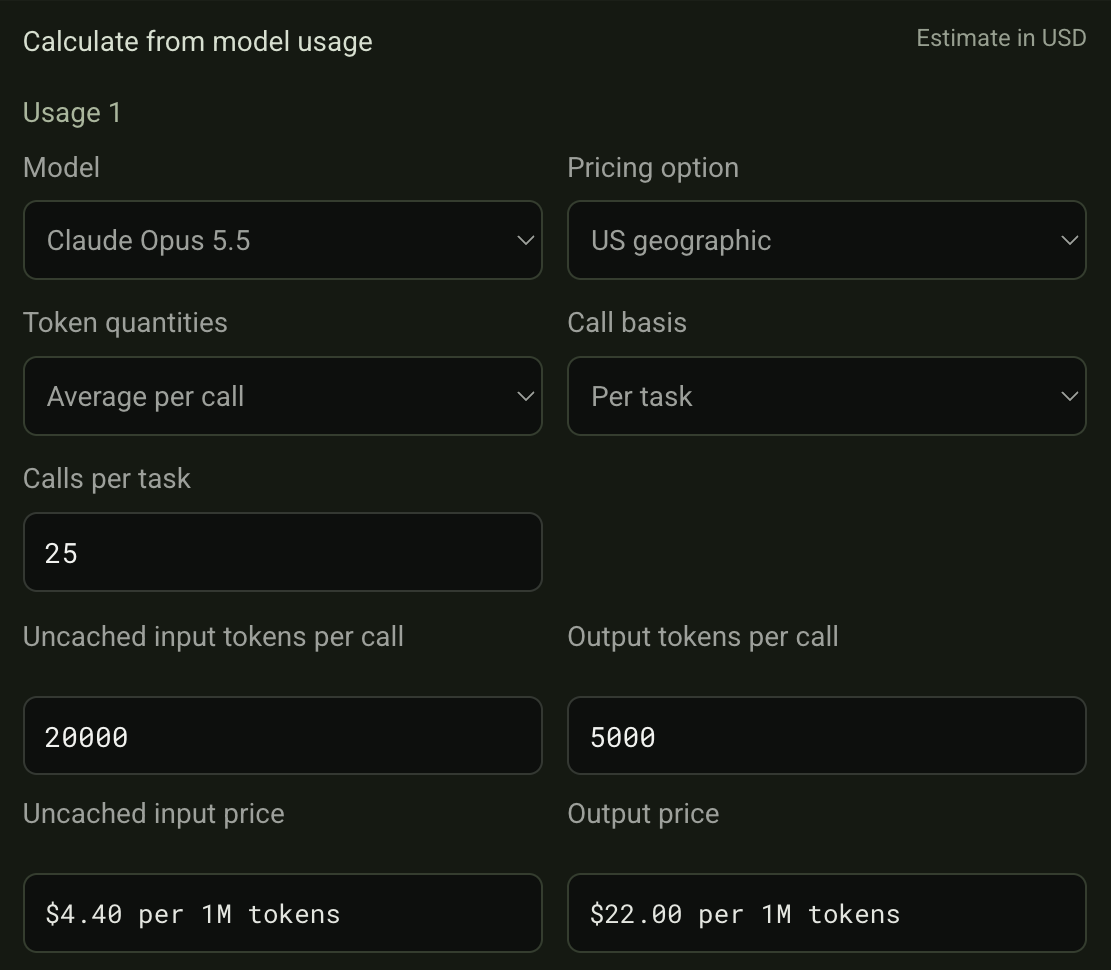
For AI model usage, you can derive the $200 inference cost from the request count, average token usage per request, and the model's input and output rates. The example assumes 25 requests per report, or 2,500 for the batch, with an average of 20,000 input tokens and 5,000 output tokens per request.
- Input amounts to 2,500 * 20,000, or 50 million tokens. At $2 per million, it costs $100.
- Output amounts to 2,500 * 5,000, or 12.5 million tokens. At $8 per million, it also costs $100.
Those charges add up to the $200 model cost in the table. As you get bills, usage records, and time measurements for your own workflow, use them to replace the assumptions behind the costs that could change your decision.
Once you have a baseline, use What if? to estimate how a change affects the cost per accepted result. Select Model cost -50% to reproduce the comparison above, which holds other costs and the approval count fixed.
Conclusion
Taskonomics measures the cost of delivering work the business can accept. Every execution contributes to that cost, whether the result passes on the first try, needs correction, or never reaches approval. That changes how businesses decide on AI, shifting from a narrow, inference-focused tokenomics view to an outcome-focused taskonomics view. Spending more on inference can lower the Cost per Verified Outcome if it reduces other costs or increases the share of results that meet the approval standard.
Before funding an AI workflow, decision makers should compare its expected cost per accepted outcome with the way the business does the work today. The investment decision also depends on what business value the AI workflow unlocks, such as handling more work with the same staff or delivering timely results. Once the workflow is in production, actual costs, acceptance rates, and realized benefits give you a basis for deciding whether to scale it or change how it operates.
How Caylent Can Help
Measuring the full cost of AI is the first step toward getting real value from it. As an AI-first AWS Premier Tier Services Partner, Caylent helps organizations apply Taskonomics to their workflows: baselining current process cost per accepted result, building AI workflows designed to cut review and rework time, and tracking Cost per Verified Outcome once they’re in production. Whether you’re deciding which workflow to automate first or proving ROI on one already running, our team can help you build the business case and the solution behind it. Download our whitepaper, The Business Value Realization of AI, try the Taskonomics calculator with your own numbers, or contact Caylent to talk through your AI roadmap.
Share