 Shane Fimbel
Caylent Services
Cloud Operations & Managed Services
Reliably Operate and Optimize Your AWS Environment
The reactive human-plus-tools model has hit its ceiling. Learn why world-class AWS agentic cloud operations require agents governed by domain experts.
For more than a decade, managed services meant the same thing: humans plus monitoring tools, reactive triage, and tickets resolved in priority order. It worked. Then demand for multi-agent systems surged 1,400%, and what looked like stability turned out to be a plateau. Cloud environments now generate more decisions per hour than any ticket queue can absorb.
The path forward pairs autonomous agents with the domain experts who govern them, turning every resolved incident into durable operational memory. That combination is what separates cloud operations that continually improve from ones that merely recover.
TL;DR
The problem is structural, not a staffing gap you can hire through. Cloud environments deploy microservices in minutes, auto-scale across regions, and surface alerts faster than any on-call engineer can triage them. The human-plus-tools model assumes the responder pool can keep pace with the decision volume. That assumption no longer holds.
The adoption data shows how wide the gap has grown. Half of all organizations now run 10 or more agents in production, yet fewer than 7% have reached full production with even one use case, according to an IDC study commissioned by AWS. The shortfall isn't the technology. It's the operational model needed to run that technology responsibly, which did not arrive alongside the tooling. Organizations deployed agents without the governance layer needed to trust their outputs, so the agents stalled in pilot.
Staffing compounds the problem rather than solving it. AI-critical skill shortages now affect 94% of leaders, according to the World Economic Forum. You cannot close a structural decision-volume gap by hiring when the people with the right skills aren't available in the numbers you need. The math requires a different model.
By Q4 2026, 71% of enterprises will run multiple agents in production. Agents are arriving whether or not your governance model is ready. The only real variable is whether they arrive with expert oversight or without it.
The data on unguarded agents is direct: 80% of organizations report unapproved agent behaviors, even as demand for these systems climbs. Agents that operate without defined boundaries — scoped permissions, escalation policies, and operational limits — take actions their teams never sanctioned and often cannot reverse. Speed without accountability is not an operational gain.
This is not a phase that ends when the technology matures. According to Gartner, by 2028, 15% of day-to-day work decisions will be made autonomously through agentic AI, and 33% of enterprise applications will include agentic capabilities. The hybrid approach is a permanent operating model, not a transitional step before agents replace human judgment entirely.
The strongest counterargument runs like this: agent reasoning is improving fast enough that governance is only a temporary measure. If agents match senior-engineer judgment by 2028, you dismantle the hybrid model anyway.
Some agents already outperform humans on detection tasks, so the counterargument has real footing. But it misreads where the human is needed. The loop between an agent's action and the institution's memory depends on a person to decide what gets remembered and generalized. That is an accountability task, not a reasoning task. Agents cannot be held accountable; experts can. The hybrid model is the mechanism that turns operational events into compounding intelligence, not a set of training wheels to remove later.
Caylent's operations run on a continuous loop: detect, triage, stabilize, improve. Agents drive the high-volume front of it by detecting anomalies with root-cause context, triaging each incident to the right resolution path, and executing remediation within pre-approved bounds. Experts own the back of the loop, where accountability lives: they stabilize anything that falls outside those bounds and improve the system by fixing root causes and updating runbooks, so the same failure is handled faster or avoided entirely. Agents take on the work that scales with volume; experts own the judgment that depends on context only a person can hold.
Agents handle:
Experts handle:
Expert-led synthesis is where the model earns its keep. ExecOnline, a Caylent managed-services customer of more than a decade, has reworked its serverless operations around automated, self-healing design where agents absorb the high-volume operational work while the engineering team builds and governs alongside them. "They have built agents alongside our engineering team that have already made meaningful improvements to how we operate," says Stuart Garner, ExecOnline's Head of Engineering. The volume work scales with the agents; the judgment stays with the people.
The 80% rate of unapproved behaviors is not evidence that agents are unreliable by nature. It points to a governance gap. These behaviors usually follow from undefined boundaries, not from limits in agent capability.
AWS introduced AgentOps to manage agents in production, organizing deployment around four pillars: governance and security, build and operations, evaluation, and observability. Those pillars give experts the language to assign accountability, but the guardrail architecture inside them depends on domain knowledge agents do not hold.
Caylent identifies four risk domains where expert-designed guardrails are non-negotiable.
In every case, the boundary has to come from a person. Agents cannot determine their own scope of action.
Incident speed is not the competitive advantage of the agent-plus-expert model. Compounding operational intelligence is.
Every resolved incident carries a signal: why the failure occurred, which agent response worked, and what the resolution reveals about the system's architecture. Teams without a structured learning loop file that signal away as a closed ticket. Teams with the agent-plus-expert model feed it back into knowledge bases and evaluation benchmarks, so the next response starts from a higher baseline.
The loop produces compounding returns only when the "improve" step is engineered rather than left to chance. That requires evaluation pipelines that test agent behavior against known-good outcomes, updated after each incident that teaches the system something new.
Caylent built the Insightly Copilot on AWS as a multi-agent CRM system using LangGraph on Amazon Bedrock. What made it production-trustworthy is the part worth studying: automated evaluation pipelines running against 25 or more golden queries designed to verify deterministic behavior. Each query represents a known-good outcome, and each pipeline run tests whether the agent still produces it. That is operational memory made testable, not tribal knowledge held by whoever happened to be on call the night of the last incident.
AWS has made agentic operations a first-class discipline within its platform. Amazon Bedrock AgentCore provides the runtime, memory, and gateway primitives that an agent governance architecture runs on. AWS also launched the AWS Agentic AI Specialization within its AI Competency program, a credential that validates partners capable of deploying self-operating AI systems that can reason, plan, and execute complex business processes.
That specialization matters for a practical reason: a governance model is only as durable as the infrastructure under it. An architecture built on AWS-native primitives such as Amazon Bedrock AgentCore, Amazon EventBridge, and Amazon CloudWatch benefits from AWS's own investment roadmap. A governance layer bolted onto a generic abstraction does not.
Infrastructure is only half of what sets the model apart. Generic operations tools arrive generic, they have to learn your environment from scratch before they earn any trust. Caylent's agents arrive already knowing what good looks like, trained on 12 years of proprietary CloudOps intelligence that encodes how the best AWS teams triage incidents, escalate the right issues, remediate, and optimize. No hyperscaler service and no off-the-shelf tool can reproduce that operational intelligence, and it is the difference between an agent that reasons like a seasoned operator from the first day and one that needs months of tuning to become useful.
Caylent Accelerate™ for Agentic Cloud Operations pairs autonomous agents with AWS-certified experts. These agents expedite 70% of remediation work and reduce MTTR by 40%. The agents run on Amazon Bedrock AgentCore and handle the high-volume work; the experts govern them and own the judgment. Evaluation pipelines connect the two, turning every resolved incident into operational intelligence that compounds over time. The efficiency gains are real: fewer reactive hours, faster resolutions, less recurring toil.
Whether you're looking to modernize existing operations or build an AI-native CloudOps strategy from the ground up, Caylent can help you deploy agentic cloud operations with the governance, expertise, and AWS-native foundation needed to operate confidently at scale. Get in touch with our team to learn how Caylent Accelerate™ for Agentic Cloud Operations and our Cloud Operations & Managed Services can help you reduce operational toil while continuously improving your AWS environment.
Traditional AI tooling for managed services focuses on pattern matching and alerting to help humans react faster to incidents. Agentic cloud operations shifts from observation to action, running a continuous loop of detect, triage, stabilize, and improve: agents detect anomalies and triage them to the right resolution path, then remediate within guardrails, while experts stabilize the exceptions and improve the environment over time. Where traditional tooling reduces noise, agentic systems reduce the actual volume of manual intervention required to keep a system healthy.
A baseline architecture uses Amazon Bedrock AgentCore for the reasoning and orchestration layer, paired with Amazon Bedrock for foundation model access. You integrate these with Amazon CloudWatch for observability and Amazon EventBridge to trigger agent actions based on real-time system events. This stack lets agents ingest telemetry and execute changes through AWS Lambda or specialized action groups.
Safety comes from expert-defined guardrails that limit an agent's blast radius, such as restricted IAM permissions and confidence thresholds for autonomous action. Teams use AgentOps to establish evaluation pillars that test agent decisions against known-good outcomes. When an agent's reasoning confidence falls below a set threshold, the system forces a human-in-the-loop escalation.
No. Agentic layers typically sit on top of existing Infrastructure as Code (IaC) like Terraform or AWS CloudFormation. Agents work with these tools by generating or modifying configuration files and submitting them through established CI/CD pipelines for validation. This keeps autonomous changes under the same version control and peer-review standards as manual code updates.
Initial returns tend to show up first in high-volume, low-complexity work — patch orchestration, cost right-sizing, and incident triage — where automation removes the most manual effort fastest. The larger, longer-term return comes from compounding operational memory: as agents and experts resolve incidents and feed each one back into the knowledge base, known issues stop recurring and experts spend more of their time on architectural improvements. The return compounds over time rather than arriving as a single one-time savings figure.
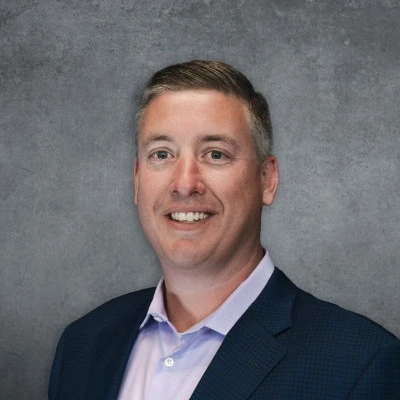
Shane M. Fimbel, PhD, is Senior Vice President of Managed Services at Caylent, where he oversees the company's managed services operation supporting a global development team. Acquired by Caylent in late 2025, Dr. Fimbel co-founded and served as the CEO of Trek10, which was one of the fastest-growing AWS consulting partners in the U.S. with a laser focus on application modernization, serverless architectures, and 24/7 AWS support. Prior to Trek10, Dr. Fimbel served as COO of Global Access Point, where he designed and built an AWS data center, operated a 9,000-mile fiber network, and closed $45M+ in debt, equity, and tax incentive transactions, including the Novogradac National Deal of the Year in 2016. He holds a Ph.D. in Neuroscience and has founded or advised a dozen companies that collectively raised over $80M in venture financing.
View Shane's articlesLeveraging our accelerators and technical experience
Browse GenAI Offerings
Explore how Amazon Bedrock AgentCore’s latest capabilities shift the role of managed services providers needed to run agents reliably in production.
Explore how Caylent and AWS are helping organizations move from AI experimentation to execution by combining agentic AI, modernization, and next-generation cloud operations to deliver faster, more secure, and more scalable business outcomes.
Learn how to return an HTTP response from AWS Lambda immediately using response streaming while continuing background execution — ideal for Slack integrations with tight timeouts.
