 Brian Tarbox
Caylent Catalysts™
AWS Generative AI Proof of Value
Accelerate investment and mitigate risk when developing generative AI solutions.
AI agents represent the next evolution of APIs, but they also bring new security challenges and attack vectors. Examine real-world adversarial threats and learn defensive strategies in this blog.
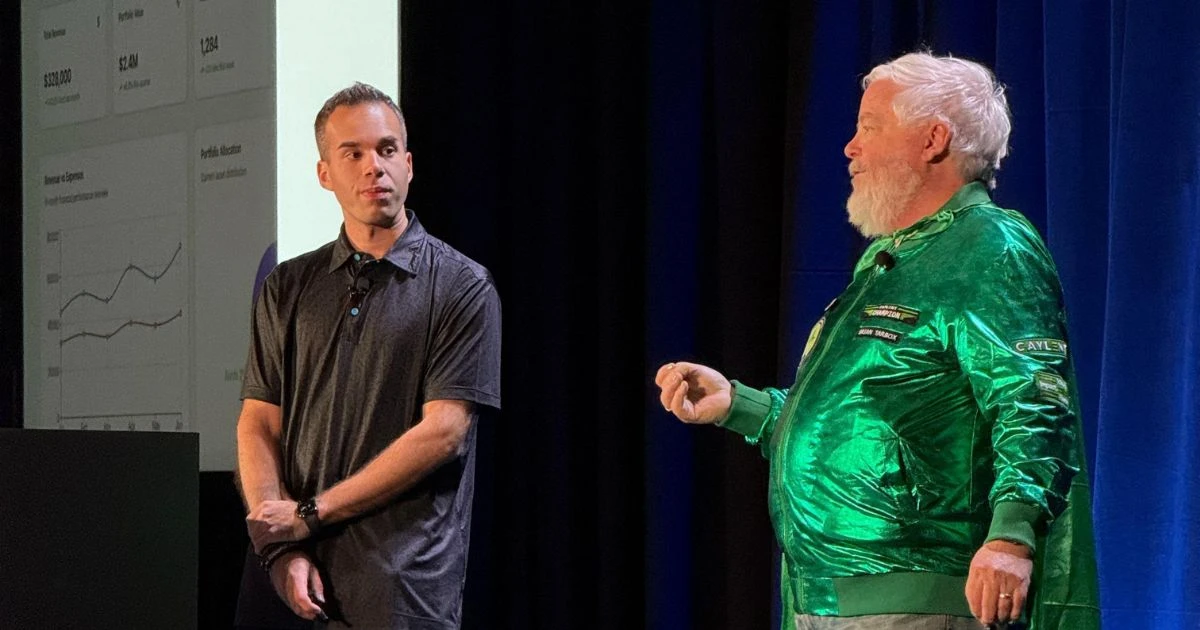
AI agents are the next frontier in intelligent automation, but they also represent a new frontier in attack surface complexity. Traditional distributed systems have static trust boundaries. Agents redraw those boundaries on the fly. With autonomy comes opacity, and with opacity comes risk. The question most technology leaders should ask isn’t "Can we build these systems?" but rather, "Can we secure them enough to trust them?"
Here’s the shape of a typical AWS agentic architecture:
Once you break it down architecturally, it looks suspiciously like every other distributed system you’ve ever secured; only now your “business logic” thinks for itself.
Amazon Bedrock has made agentic systems accessible:
While individual services matter, real safety emerges from how they’re designed together. Security is built through architecture, treated as a discipline that shapes every layer of the system.
A production-ready AI agent on AWS generally resembles a high-trust distributed microservice spanning multiple planes:
Each plane demands independent controls and unified telemetry. System safety depends not on blocking intelligence but on binding it to context, policy, and accountability.
Malicious or confusing instructions embedded in context data can redirect LLM behavior.
Mitigation requires multilayered validation, starting at content ingestion rather than at model inference. Prompt injection is the SQL injection of the LLM world. You can sanitize inputs, but reasoning itself is the parser. Attackers can hide malicious instructions in text, PDFs, or even Jira comments. Once indexed, those instructions become part of the model’s memory.
How to defend (AWS-style):
Rule of thumb: Treat every document like executable code — validate before trusting.
Every function exposed to an agent doubles as an API endpoint open to abuse. Never hand a reasoning system unconstrained keys. An agent with wildcard credentials can do more damage than a naive intern on day one. Every tool an agent can call is, in practice, an API surface that can be driven by arbitrary inputs (including hostile or misaligned ones), and if that surface is backed by over‑privileged credentials, misuse quickly escalates into real-world damage.
How to defend:
Agents calling agents sounds powerful until one starts impersonating another. It is dangerous for AI agents to call each other because each agent becomes both an attack surface and a high‑trust authority for the others, so one compromised or misaligned agent can rapidly escalate into system‑wide data leakage and unsafe actions.
Hardening strategy:
Remember: Inter-agent communication should look like a transaction log, not a chat room.
RAG pipelines have become the new software supply chain. Every time your agent indexes new documents, it’s editing its brain. Poison just one file, and you’ve corrupted its reasoning logic. Research shows that corrupting even a small number of source documents can introduce backdoors. In Anthropic's study, they found that “malicious actors can inject specific text into these posts to make a model learn undesirable or dangerous behaviors.”
Mitigation pipeline:
This makes ingestion auditable and reversible, like version control for cognition.
While autonomous agents are the shiny new toy, not every workflow needs to be autonomous. Most need to be controlled, observable, and interruptible. While some workflows are dynamic (think phone trees), many, if not most, follow a fixed set of steps.
For example:
This is not a workflow that needs autonomy. In fact, autonomy would be very bad here. Imagine that the look-up-patient-id agent prioritizes returning some ID over returning just the correct ID? It might decide that a “close” match to a patient's name is acceptable and return the ID of the wrong patient. When in doubt, go deterministic: define exactly how your agent flows from insight to action. In these cases, AWS Step Functions may be a far more appropriate solution. Ask yourself if you’d prefer a pharmacist to methodically perform the required steps (check patient ID, check for medication interactions, verify dosage) or do a “flexible” or “creative” approach before dispensing your pills.
AWS now offers a complete ecosystem for secure autonomy, but the onus is on architects to use it coherently.
When combined, these controls transform autonomous systems from opaque black boxes into auditable components of your application ecosystem.
Agentic security doesn’t end with prevention; it depends on visibility. Amazon Bedrock AgentCore Observability now enables real-time introspection of LLM calls, action sequences, token usage, and latencies — bridging the gap between inference and intent.
Combine that telemetry with AWS Security Hub, Amazon CloudWatch metrics, and AWS X-Ray traces to create your organization's first true feedback loop for cognitive systems.
This is how agent governance becomes measurable. You move from “We hope it’s safe” to “We can prove it’s safe.”
Developers are excited about agentic systems, but their enthusiasm needs to be tempered with security realities to avoid potentially disastrous outcomes.
Take these steps and your organization can safely embrace agentic systems.
Security stabilizes innovation by enabling it to move faster and with confidence.
The organizations that master secure autonomy will iterate faster precisely because they can delegate more safely. AWS has given builders the primitives such as Amazon Bedrock Guardrails, AWS Step Functions, Amazon Bedrock AgentCore, AWS IAM, and Amazon GuardDuty to make that possible.
It’s now up to us to use them as engineering artifacts, not afterthoughts. AI agents will become teammates, not tools. But like every teammate, they need guardrails, accountability, and context. Build them that way, and they’ll earn your trust.
If you’re looking to modernize your cloud security strategy for an agentic, AI-driven future, Caylent can help. As an AWS Security Consulting Partner of the Year, we work with organizations to design and secure architectures that balance autonomy with trust—embedding guardrails, observability, and least-privilege controls from day one. Whether you’re securing AI agents, modernizing legacy cloud environments, or rethinking governance at scale on AWS, our experts are ready to help you move faster with confidence. Reach out to Caylent to see how we can strengthen your security foundation while accelerating innovation.

Brian is an AWS AI Hero, Alexa Champion, has ten US patents and a bunch of certifications, and ran the Boston AWS User Group for 5 years. He's also part of the New Voices mentorship program where Heros teach traditionally underrepresented engineers how to give presentations. He is a private pilot, a rescue scuba diver and got his Masters in Cognitive Psychology working with bottlenosed dolphins.
View Brian's articlesCaylent Catalysts™
Accelerate investment and mitigate risk when developing generative AI solutions.
Caylent Catalysts™
Accelerate your generative AI initiatives with ideation sessions for use case prioritization, foundation model selection, and an assessment of your data landscape and organizational readiness.
Leveraging our accelerators and technical experience
Browse GenAI Offerings
Explore what’s new in Claude Opus 5.5, from stronger coding and knowledge-work performance to lower pricing, updated API behavior, and broader safeguards.
Explore what’s new in Claude Fable 5.1, how it compares to Fable 5, and what organizations should validate before migrating their workloads.
