 Brian Tarbox
 Guille Ojeda
Caylent Catalysts™
AWS Generative AI Proof of Value
Accelerate investment and mitigate risk when developing generative AI solutions.
In Werner Vogels’ 2025 AWS re:Invent keynote, he reminded us that as technology continues to evolve, developers must evolve too. Discover how engineers are becoming “renaissance developers” and why ownership matters more than ever.
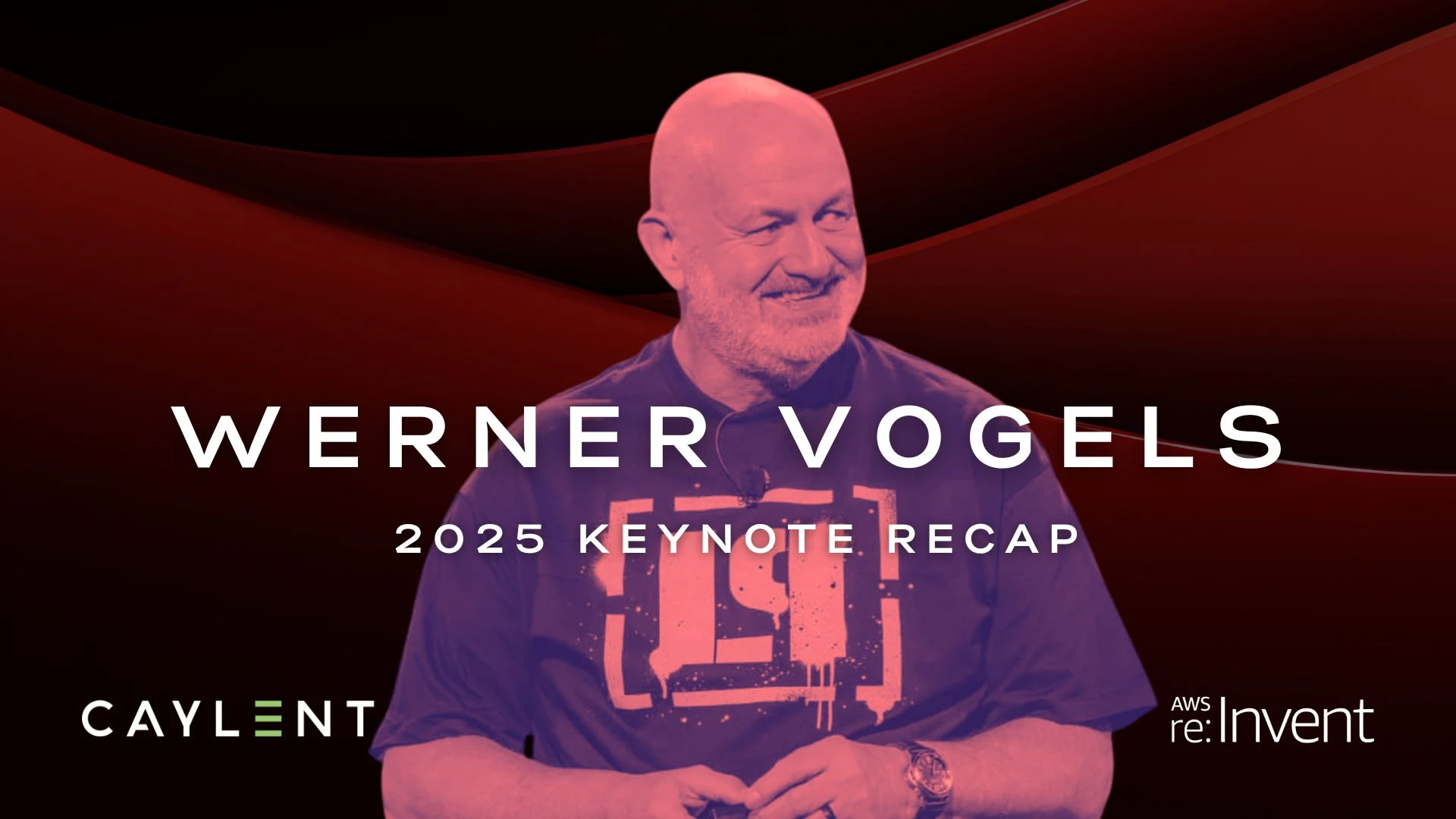
At his final AWS re:Invent keynote, Werner Vogels didn’t focus on closing a chapter; he set direction. As AI becomes embedded in how software is designed, built, and operated, the role of the developer is expanding rather than shrinking. The future Vogels described is one in which technical skill alone is no longer enough, and in which judgment, ownership, and systems thinking matter more than ever.
We are entering a period where technology is increasingly applied to meaningful human challenges. Generative AI, autonomous agents, and large-scale distributed systems are no longer abstract concepts; they are tools that teams use today. But as these capabilities accelerate, success depends less on how quickly we can generate output and more on how thoughtfully we apply it.
As AI absorbs more of the mechanical aspects of development, the human role shifts toward integration, reasoning, and communication. Developers who thrive in this environment understand systems as living entities, shaped by tradeoffs, constraints, and people.
This is the essence of the Renaissance Developer. Not a specialist locked into a single tool or language, but a builder who combines technical breadth with domain insight and strong communication. These developers translate business intent into technical reality, coordinate across teams, and continuously refine systems as conditions change.
Communication remains central because software is never built in isolation. We communicate with machines through code and prompts, with teammates through specifications and reviews, and with customers to understand what actually matters. Those feedback loops are what keep systems aligned with real-world needs.
Software development has never been static. Over decades, developers have learned new languages, adopted new paradigms, and watched entire categories of work become obsolete. Each shift replaced one kind of differentiation with another. Back in the day, lots of developers made their living writing “C” function libraries, and now that market no longer exists.
Generative AI fits squarely into that pattern. It dramatically lowers the cost of producing code, but it doesn’t remove the need to understand what that code does, how it behaves in production, or how it fits into a larger system. As Vogels noted, productivity gains without comprehension introduce risk. When teams generate more code than they can reasonably review, gaps form between intent and behavior, gaps that tend to surface later as outages, security issues, or runaway costs.
As systems become more autonomous, responsibility shifts rather than vanishes. Decisions still have consequences, and someone must ultimately own the outcome.
AI systems can suggest architectures, generate implementations, and optimize paths forward, but they don’t participate in organizational decision-making, weigh cost constraints against performance goals, or wake up to pages when something fails—that responsibility still sits with humans.
This is why ownership was featured so prominently in Vogels’ message. The builder remains accountable for the solution end-to-end, from design through operation. AI may accelerate execution, but it also increases the importance of knowing why decisions were made and how the system behaves under pressure.
The ease with which teams can now prototype has changed how software begins. Ideas can be tested faster than ever, and creativity is valuable. But without structure, speed can create fragility.
Long-lived systems depend on shared understanding. Practices such as test-driven development, clear specifications, and deliberate reviews serve a purpose. They encode intent in a way that endures beyond the moment of creation. Vogels’ call to apply these techniques to AI-generated code reflects a broader truth–engineering discipline is what turns experimentation into reliability.
In the generative AI era, code only creates productivity when it’s understood, reviewed, tested, and placed in context; otherwise, it becomes technical debt that compounds over time.
Vogels closed with a reminder that resonates precisely because it is simple. Go solve real problems. The availability of powerful tools does not change the responsibility to use them well. If anything, it raises the bar.
AI offers leverage, but impact comes from judgment. The future belongs to developers who pair advanced tools with ownership, empathy, and clear thinking — and who recognize that the most important work isn’t generating more code, but shaping better outcomes.
The Renaissance Developer is already emerging. The question is how intentionally we grow into that role.
Building on AWS today means navigating a landscape where new abstractions emerge quickly, but foundational decisions still determine long-term success. Teams need partners who understand how to balance innovation with operational rigor.
At Caylent, we help organizations design and build AWS architectures that respect those fundamentals while embracing what’s next. Whether that’s large-scale AI, agentic systems, or modern application platforms, Caylent has brought hundreds of complex AI systems to production. These are challenging and exciting times to build, and having a guide can make the journey both faster and more reliable.
We’re excited to see what you build next, and we’re here to help you get there.

Brian is an AWS AI Hero, Alexa Champion, has ten US patents and a bunch of certifications, and ran the Boston AWS User Group for 5 years. He's also part of the New Voices mentorship program where Heros teach traditionally underrepresented engineers how to give presentations. He is a private pilot, a rescue scuba diver and got his Masters in Cognitive Psychology working with bottlenosed dolphins.
View Brian's articles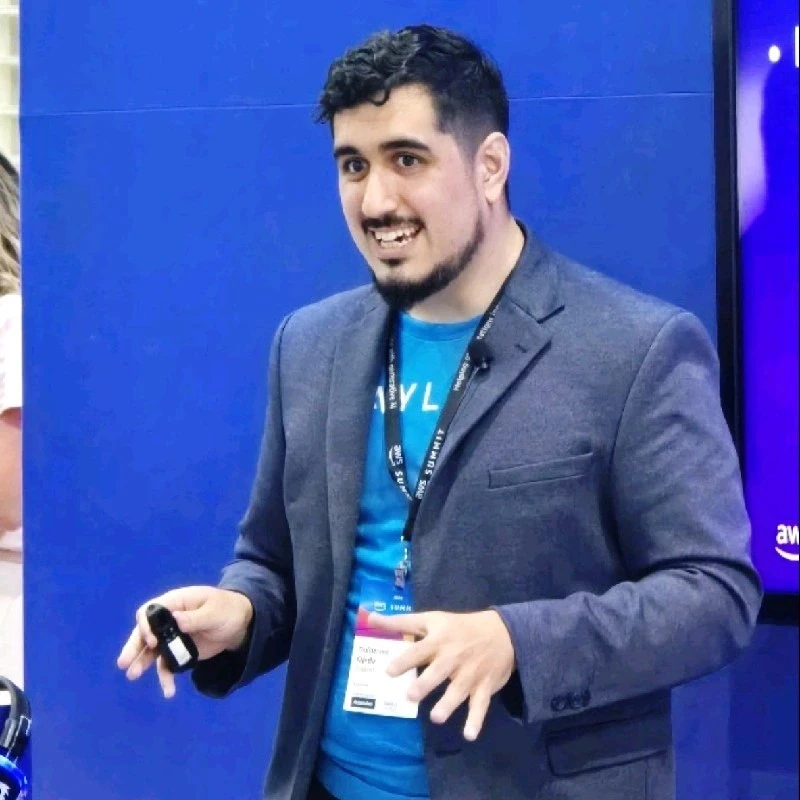
Guille Ojeda is a Principal Innovation Architect at Caylent, a speaker, author, and content creator. He has published 2 books, over 200 blog articles, and writes a free newsletter called Simple AWS with more than 45,000 subscribers. He's spoken at multiple AWS Summits and other events, and was recognized as AWS Builder of the Year in 2025.
View Guille's articlesCaylent Catalysts™
Accelerate investment and mitigate risk when developing generative AI solutions.
Caylent Catalysts™
Accelerate your generative AI initiatives with ideation sessions for use case prioritization, foundation model selection, and an assessment of your data landscape and organizational readiness.
Leveraging our accelerators and technical experience
Browse GenAI Offerings
Explore all of the launches and capabilities announced at the 2026 AWS Summit in New York City, including Amazon Bedrock Managed Knowledge Base, AgentCore harness, AWS Context, and AWS Continuum.
AWS will end support for Amazon Pinpoint on October 30, 2026. Learn what's going away and what's surviving, what your migration options are, and how to quickly audit your environment to see your exposure.
Explore all the exciting announcements from Dr. Ruba Borno's partner keynote. From the general availability of AWS Transform compatibility to new AWS Marketplace capabilities, the updates showcased powerful new ways for partners to deliver value.
